Showing posts with label Yemen. Show all posts

Friday, 13 December 2013

The Danger of Disobedience

Assalāmu'alaikum wa ramatullah


The danger that would emerge as the result of disobedience to the God the Highest is that one would face disasters and fall into disdain in this life and the hereafter...

Quran

Says the God the Highest, "Verily he who comes to his Lord as a sinner (at Judgement), - for him is the Gehannam; therein shall he either die nor live" (Surah Ta-Ha 20:74). "Do those who practice evil think that they will get the better of Us? Evil is their judgment!" (Surah al-'Ankabūt 29:40).

The phrase they will get the better of Us (Surah al-'Ankabūt 29:40) means that, they could get away from the judgment of the God the Highest during Resurrection with tricks and defeating His judgement as to avoid His punishment.

Says the God the Highest further, "It is not for a believing man or a believing woman, when the God the Highest and His messenger have decided a matter that they should (thereafter) have any choice about their affair. And whoever disobeys the God the Highest and His messenger has certainly strayed into clear error" (Surah al-Azab 33:36).

Hadith

Noble prophet Muhammad s.a.w says, "A person who commits adultery would never commit adultery while he is with faith, a thief would never steal when he is with faith, and a person would not drink alcoholic beverage while he is faithful".

"While a servant committed a sin, a black spot appears in his "heart". If he returns and repent then his "heart" would be cleaned. If he repeats the sin and the spot appears again and it would grow up bigger and bigger there until the "heart" turns dark. The God the Highest says, "No! Rather, the stain has covered their 'hearts' of that which they were earning" (Surah al-Mutaffifin 83:14)".

Prophet Muhammad s.a.w further said, "Callousness of one's heart (rejecting advices due to egoism) is due to the abundant of his sin. Indeed, a servant is prevented from his sustenance due to the sins which infected his soul...".

Quotes

The God the Highest says to Moses the prophet, "O Moses! The first being who died was the Devil, the accursed one. Since he is the first being who lost his loyalty to me and my commands. Whoever is not loyal to me then I would certainly record him as a dead man!"

Sa'id bin Musayyab says, "Servants become noble with their own deeds such as with their loyalty and obedience to the God the Highest. He made himself a despicable being when he throw himself into the state of humiliation when he disobey the commands of the God the Highest. Sufficient for a 'believer', when he sees those who associate themselves with the enemies of the God the Highest committing vices and crimes through invocation for His assistance and support!"

Muhammad bin Wasi' said, "Sins made a heart of a being dies". While the Salaf clerics said, "If you disobey the God the Highest who oversees you, indeed you are looking down upon Him and His transcendent view. If you commit disloyalty to Him and thinking that He could not reach You with His view, indeed you are a blasphemous infidel! Disloyalty is the messenger of infidelity."

While Wuhaib al-Ward was asked by someone, "Could a disloyal person find sweetness in worship to the God the Highest while he commits mutiny to Him?" He answered, "No! Even those who plan to commit disloyalty to Him could not taste the sweetness of worship and devotion".

Globally could be said that the sign of one is deemed as lower creature in His view when he commits the act of disloyal beings. When he continues to dwell in it, the wrath of the God the Highest would reach Him. He will be the most beloved one of the satanic beings and the faithful servants would avoid him.

When your "self" tells you to commit mutiny and disloyalty to Him, reminds it through the awareness that He is supervising everyone and He reveals His promises through the tongue of sages and prophets and He would certainly keep His promises through His Justice.

The consequence of the committed crimes and sins do not end with the lost of one' prestige within His view and the worlds or being driven out from the link of "meritorious" deeds of those who performs charity and chastity; but in those crimes and sins, there are contemptible sentences and the torments accompanying them. Sins and crimes naturally consists the Wrath of the God the Highest where the earth and heavens would lost their balance to bear it!

Thus let us pray together may the Lord the Highest, the King saves us through His generous bestowals.... Inshā Allah...
Sealed with prayers for mercy, peace and love, amin!

Wednesday, 4 December 2013

South Arabia: Prosperity of the States

Assalamu'alaikum wa rahmatullah


Right now if we visit those ancient archeological sites in Hadramawt region, perhaps we could only see vast desert and sands with hot sun shining at the day. However, there was a great state with green farms and fertile land. There were city-states known as Mo'in, Saba' and Himyar. 

There were no Euphrates like in Iraq and no Nil river like in Egypt. Rain hardly pouring down there and they receive the rain once a year. They had no choice except to build a dam which is known as the Ma'arev Dam and they use the water kept their according to the necessity for agriculture activities. The original Sheba city-state was just an oval shaped city with the radius of one kilometer. They city was heavily fortified with walls and there were Eastern and Western gates. The name of the king who established the city-state was carved at the Western gate, Yas'amar Yabin the son of Samah 'Ali Yanoph, Ma'arev Saba.   

Some ancient states such as Mo'in, Baragesh, Shabwa, Sāfar and ana'ā could be grouped into vanquished old states because they were humped by thick desert sands. Only Sana'a could be managed to be reconstructed where a new city was build upon the old one. Sana'a became the center for Persian administration during their invasion in Yemen for some time around 7th century. One of its beautiful palace in ancient time was, the Ghamdan. One of Western researcher known as Halifix had discovered the city of Mu'in from the sand. The city was not known even to natives of Yemen herself until the archeologist dig up the remain of the ancient city from the sand. 

Abu Muhammad al-Hasan al-Hamdani (893-945 AD) in his literary work, al-Iklil mentioned that he founded the remains of palaces and edification of ancient Yemen. He even describes on how did those buildings and citadels look like in the book but many did not believe him. They accused him as exaggerating and making up stories out of his imagination. However, if we could fairly be considerate on the motives of the writer, we could also think that what benefit could he get if he tell lies? Will he acquire fortune with the lies? His stories had attracted Western researchers to see it with their own eyes and so we could see some of the such as Halifix, Arnot and Glazar among the Western archeologists who had unearthen the ancient cities from the sand in Southern Arabia. Al-Iklil talks about the genealogies of HImyarites and the wars of their kings in 10 volumes. Part eighth deals with the citadels and castles of South Arabia and it was edited and annotated by Müller in Die Burgen und Schlösser Sudarabiens (Vienna, 1879-1881).

Their efforts in the catchment of rain is among the most amazing things which we could see in the world and the dam is still in existence until nowadays.

Sealed with prayers for mercy, peace and love, amin!

Tuesday, 3 December 2013

South Arabia: Kingdom and Nation

Assalamu'alaikum wa rahmatullah


Development to a Kingdom

In Arabia, what is understood as a kingdom actually consists of few halls and houses owned by a Sheikh (elder) or an Amir (prince). In those halls, there were altars for worship addressed to the owner of that particular hall or palace. 

Later, an influential chief of a clan becomes prominent and the clan expanded its families around so other smaller groups will approach them and associating themselves to the one which is prominent although they are not related by blood. Sooner or later, a small kingdom emerged slowly into a larger one. This is how the kingdoms such as the Mo'inites, Sheba, and Himyarites were established in Southern Arabia. All of them were actively involved in international trade and their influence was based on their record in trading and mercantile. 

Kingship


The head of the kingdom was a king. His order is an order and nobody disregard his order. The kings reigned in the palace and seldom went out from their palace in Ma'arev or in other places. The king usually do not supervise the soldiers and army since the war seldom happened between Southern Arabia with other kingdoms. Their soldiers only protect their trading caravan and defending their states from foreign invasions. Soldiers in Southern Arabia were involved in public works such as building houses for the citizens, paving roads, maintenance of the roads and maintenance of the Dam of Ma'arev.

The succession of kingship was by inheritance from a father to a son and from a son to his son. If the king has no son then the kingship would go to the nephew of the king. The Hadramawt region has rather a different way in the succession of kingship and it happens since before the arrival of Christianity there. The kingship is not by family succession but to the son who born first of any feudal lord who ruled the regions within the kingdom. When the king feels like he needs a successor, he would order the names of feudal lords' wives who are pregnant to be presented before him. They would be brought under special care until they deliver their babies. Once a baby son was born then the baby would be nominated and nurtured as the future king although he is not from the king's family (Jurji Zaydan; Pre-Islamic Arabia). The kings also possess their own royal design with the titles such as Basta' and Rayyam in Mo'inites kingdom. While in Sheba kingdom, the kings were called as Yablin, Yawf and Watār

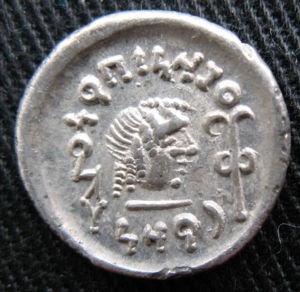
They had their own currency with the image of the king, his name, the name of the state and the detail on the location of the coin being stamped was carved at the coins. Yemenite old coins could be seen in European exhibition centers but I am not sure which place kept the old currencies... Maybe they could be seen in British Library because Europeans and Japanese are better than us in South East Asia in term of keeping those world heritage stuffs. I have heard that the ancient Hindu stupa and other ancient archeological sites in our sultanate had been razed to the ground without any attempt by the state government to protect those historical sites. What a shame... You had lost one of the witness for your civilization and you behave just like those "stupid" uneducated Arabs in Jordan who sold the Qumran scrolls to American researchers in 1940's without checking on what benefit that you could get by analyzing those stuffs yourselves. The money that you receive would last in the period of time but the knowledge that you have could be passed to others around you and be benefited for humanity...

Situation in the Kingdom


The proofs about Southern Arabian lifestyle could be deciphered from their ancient coins. Their kings usually would mat their hair and letting the hair flowing from their left and right sides. Some of them released their matted hair at the back of their head. There was no proof that they prefer to have bushy beard. Even I could tell this when looking at my grandfather picture and also other relatives of my father. They do not like to have bushy beard. They only keep their sidelocks and some of them have light beard with mustache.

Ancient southern Arabs mostly riding horses but they also developed their preference toward elephants or chariots after they mingled with the Ethiopians from Africa.

Jurji Zaydan quoted the statement of Theophatus regarding the transportation used by Himyarite king, "King Justinian I had sent a group of emissaries to the Himyarite kingdom. The chief of the emissaries was Julian. Julian reported that the Himyarite king sit on a huge golden chariot pulled by four elephants. The king wears loincloth and covers his body with a cloth sewn with golden thread. He also wears rings made of precious stones at his fingers, holding lances and a golden shield. People singing praises behind him while they travel around. In the palace meeting hall, the emissaries presented the king with the royal letter from the Eastern Roman empire. The king welcomed the letter and kissed it before opening it. Later, he kissed the eyebrows of every person in the Roman emissaries and everything which has been sent by Eastern Roman emperor to him. The letter called the Himyarite kingdom to expel Persians from his country and from the border of the country besides to make sure that Eastern Roman traders from Alexandria could safely moving here and there for their business trip. The king granted all the wishes of the Eastern Roman emperor since they were good friends".

Society


The social strata of the people in Southern Arabia could be divided into four classes. They are:

1. Warriors and soldiers who protect the state, maintaining the fort and guarding the safety of business caravans in the trading routes.

2. Farmers who were involved with agricultural activities.

3. Skilled workers.

4. Businessman, merchants and traders.

Everything which was mentioned by Julian, the chief of Roman emissary to the Himyarite kingdom and the classes of society could still be seen up to now. The Yemenites especially from Hadramawt has this custom of kissing the eyebrows of their guests and kissing the presents given to them. I used to practice this custom too but later on I feel that the norm is quite weird since nobody around me practice that as they are non-Arabs so it automatically stops.

People of Hadramawt were distributed into four classes too... It is almost comparable to ancient Indian social system and I believe that this system will never cease to exist until the doomsday but it only transforms into another form here and there...

1. Sayyids or religious people from the lineage of Ali r.a and Fatima r.a which is known as the Ahl Bayt and Hashemites since the inter-marriage was only within family member and tribal system. It is most comparable to Bramha-Kshatriyas and Brahmins of ancient India.

2. Soldiers, kings and warriors who protect the state. Mostly comparable to ancient Indian Kshatriyas.

3. Farmers and merchants which are comparable to the Vaisyas.   

4. The weak and paupers which are grouped as the dhu'afa. Comparable to the Sudras in ancient Indian social strata.

Those from the lower group are strictly prohibited from marrying the women from the higher classes. It happened in our communities too. I guess some people already talked about this and even condemned us, lol. There were lack of Arab women here so Arabs in South East Asia actually inter-married with local women. So, the children speak in their mothers languages but are still Arabs as according to their father ethnicity. There are Sayyids, Sheikhs and Sharifs in South East Asia but my grandfather family do not use the title because of family and clan issues. I guess all of those title stuffs are weird. The God the Highest do not recognize us with that but only with taqwa. I hate some of those fellow Sayyids too, hahaha...

In India there were people who were so strict even they refuse to have child with the women from lower social classes though both of them were married just like in the case of Hindi movie actress, Madam Meena Kumari and her husband, Mr. Kamal Amrohi. Mr. Amrohi refused to have children with Madam Meena Kumari because she is not from Sayyid class. I guess that, it is the most crazy thing that I have ever heard. Why a man bother to marry a woman if he does not want to have a family with her???!    

Sealed with prayers for mercy, peace and love, amin!
Monday, 11 November 2013

Fear

Assalaamu'alaikum wa rahmatullah


I had few times talked with some Christian friends and I used to mention to them about fear to the God the Highest. Well, if people talk with me, I would try very hard avoiding from imposing our views on others but only explaining what is our belief. I found that they cannot understand and keep repeating about Jesus love and salvation through the divinity of lord Jesus is better than fear to the God because the way the God can be approached is through love. Most of all they are "new" converts which sometimes make me feel annoyed as they behave like some kind of religious zealots and trying to baptize me by pressuring persuasion. I am still maintaining connection with my non-Muslim friends including some of them are Buddhist monks and I never convert any of them! I only talk about my belief or faith when they ask me. If they do not ask me then I will remain silent. I do not like to compare anything to make others look bad or to force something which is not "meant" for them. I also believe in the soul tendency other than the Wisdom of the God

First of all, I respect Jesus Christ as a noble prophet and we give due honor to his mother, lady Maryam the virgin who talked with the Archangel Gabriel a.s. We are strictly prohibited from saying bad words about Jesus a.s or else we will automatically become apostate as to show that there is not much difference between noble prophets and messengers of the God who conveys His message to the Earth. The way we talk about Jesus a.s is the way that we talk about other prophets that we have faith in down to Muhammad s.a.w as the seal of eras. I am familiar with theophany theory in few world philosophies and I do not like to dwell so much in it as it is not practical. It is just a "theory"!

Method of Servants

Fear as according to Abu Hamid al-Ghazali in his "Method of Servants" and according to the Glorious Quran refers to three meanings...

1. Shy, humble and respect
2. Devotional obedience in worship and services
3. Purifying the heart from influences of sin

And there is a mention about genuine fear by Abu Hamid al-Ghazali. These are the conclusion from his book. Generally speaking, the word which is translated simply as fear from Arabic refers to the avoidance of one self from His wrath and punishments due to crossing the lines which is drawn by Him who is Supreme. General fact of fear is that He oversees us and we cannot escape His vision by committing errors in hidden or in open space. He never lost us on whatever He commands us as we are in His vast Kingdom.

Definitions

The word taqwa was like other Semitic words was derived from three letters root verb. It is the eighth stem in the Arabic tongue articulation dictionary and lexicon mediator. It could literally means...

(1) protecting one self from something.   
(2) afraid of the penalty and avoid from violating the "nature"
(3) cautious and avoidance of something 
(4) making something as a protection and boundary line for something

Encyclopedia of Islam (2013) mentions that the word "fear" is an Islamic term which denotes God-consciousness, mindfulness and piety. The literal meaning is to put a barrier between one self and the wrath of the God. This is an ethical base for a Muslim and Muslims who form a community. It plays a significant role in one's relationship to the God by reminding believers of His omnipotence and knowledge. Fear is one of few stations in the Path. And it is important due to its ability in bringing one closer to the God. 

Ibn Katir Exegesis mentions that the root of the word taqwa is to avoid what one dislikes. It was reported that Umar al-Khattab r.a asked Ubay b. Ka'ab r.a about the word. Ubay r.a asked him, "Have you ever walked on a path that has thorns on it?" Umar r.a said, "Yes, certainly". Ubay r.a asked him agaim, "What did you do then?" Umar r.a replied, "I rolled up my sleeves and struggled". Ubay r.a answered, "So that is taqwa (fear). It is a sense of protecting one self from sin through dangerous journey in this life so that one can successfully complete the journey without being influenced by sin".

Ibn Abbas regarding the verse from Surah al-Baqarah 2:2 which means, "the guidance for the fearful" said that "the fearful" means, "They are the believers who avoid associating the God the Highest with anything from the Earth and Heavens and who work in His obedience". He further elaborates, "They fear the punishment of the God the Highest which would come if they abandoned the true guidance that they already recognize and know. They also hope in His Mercy by through His revelation".

Sealed with prayers for mercy, peace and love, amin!

Wednesday, 6 November 2013

Yemenite in the United Kingdom

Assalaamu'alaikum wa rahmatullah

Just a simple video about our people in the United Kingdom... My paternal grandfather (a Yemeni-Sindhi) also served a British company as a chief clerk in Kedah state in the British Malaya around 1930s to 1940s... Two of my father's sisters from the same mother passed away like many years ago... My paternal grandmother is a Malay lady and she is the elder sister of my maternal grandmother. My beloved maternal grandmother was the last of four siblings. Their ancestors were summoned by the Sultan of Kedah from the previous Pasai kingdom in today's Indonesia to help in transportation linkage route. Their male family members landed at the Sungai Aceh in Pulau Pinang today before moving northward around 18th century.    


There are those Arabs in Indonesia especially before the Sumpah Pemuda event took place where all of them consider themselves as Indonesians by abandoning their Arab identity (I am not sure whether all of them or almost all of them), particularly in Sumatra and Java while some more were in Indo-Pakistan region as we only recognize India based from the previous Islamic empires there where my father's paternal grandmothers came from. Still, our ethnicity classification is Arab and we are more polite than those in the Middle East, haha.

I know many people would draw racist remarks on Arabs when they see those from the Gulf States today behaving like animals when they are on trip in other countries. We are far from that attitude because many of us Yemenite Arabs were poor people. We have to work very hard and our people were staunch traditional Shafi'ie jurisprudence adherents which emphasizes on manner and precise classification of judgments, haha. Yemen as what has been rumored by some superstitious Yemenite Jewish people was cursed by previous prophet that it will become a poor land. I cannot remember which prophet but I am sure not a major one. And yes... There are Arabic speaking Jewish in Arabian Peninsula since before the era of prophet Muhammad s.a.w until nowadays. Some become Muslims like a Hebrew companion known as Abdullah bin Salam, some still maintaining their religion, Judaism until today. The Hashemite Arabs in Yemen were not Yemenite by origin but they were from Iraq and Holy Mecca itself fleeing Abbasid caliphate persecution. Abbasid caliphate is our cousins' caliphate (We are Hashemites from Ali r.a and Fatima r.a).
  
Sealed with prayers for mercy, peace and love, amin!

Thursday, 28 June 2012

Qad Kafaani Poem in Chinese

Assalaamu'alaikum wa rahmatullah

我不選不求因為我主的知識對我滿足

我的祈禱當我在煩惱做證明我這個貧窮
因我是個貧窮的原我當在幸福和困難時候都做祈禱
我是個奴隸,我自尊是以我的貧困於是我的義務

我的主啊 您是我的大王
您知道我的情況
您也知道我心中的煩惱

援救我跟您的禮貌
我的主您上所有主的主
援救我啊 您是最慷慨的主
因為我怕我不能夠耐心

我不選不求因為我主的知識對我滿足
您的幫助是很快降來的幫助
所以我求您的幫助快下來

願它打敗我一切的困難
願它帶來我一切希望
真主啊 您最就近主
您很快回复奴隸的祈禱
您以切事都聽力

我到悟通過我的無能力通過我的歸順通過我的弱點
我不選不求因為我主的知識對我滿足
我仍然站在門口,所以我拜託您呀,我的主
可憐我呀!

在您慷慨的山谷中,我在禮拜寺裡冥想
因此,讓我在這里永久冥想吧

讓我有良好的假設對您
因為它是我的好友我的盟友
因為它日夜陪伴我
我不選不求因為我主的知識對我滿足
真主啊!我靈魂有一個需要
所以賜它給我吧
因為您是最好的送禮者
幫我安慰我的秘密,幫我安慰我的心裡
幫牠冷靜從燃燒
在快樂在幸福
以及只想您對我高興
我的狀態就是喜悅和擴張
我的遮掩是我的格言

因為我主的知識足夠了,我不選擇不懇求

- Imam Abdullah Hadad Rahimahullah, Hadramawt, Yemen

Monday, 16 January 2012

Arabian Chronicle: The Kingdom of Kindah

Assalaamu'alaikum wa rahmatullah

Kingdom of Kindah

According to at-Thabari, the servants and companions of Himyarite kings were the children of Himyarite noblemen themselves. One of them is Hassan bin Tubba' who was also the chief of the Kindah tribe. When Hassan began his conquest in the Arabian Land, he entered the area through Hejaz. Before he went out, he appointed his relative whose name is Hajar bin Amr to be his representative in ruling the tribes from the descent of Ma'ad bin 'Adnan who lived in Hejaz. Hajar executed the order with integrity and after he passed away, he was succeeded by his son, Amr al-Maqsur. 

Abul Fidaa' narrated that the first king of Kindah kingdom was known as Hajar bin 'Amr. He is a descent of Kindah bin Sheba. Before he became a king, the tribe has no king. They lived on the basis of survival is for the fittest. The weak would be dissolved just like European continent before the introduction of European Union (EU) post-world wars. When Hajar ascending the throne, he exercised the politics according to its manner and administrating the people in a more systematic way. He subdued few provinces in the dominance of the Lakhmid Arabs which were in the land possessed by Bakr bin Waael.

After Hajar's death, he was succeeded by Amr al-Maqsur. Al-Maqsur means shorty. It means that Amr does not like to prolong old things into the new one because he believes that his father's possession is enough for him. After al-Maqsur's death, he was succeeded by al-Harith bin Amr. He was counted among strongest king at that time and he lives the same time with the Persian emperor known as Qubaz bin Tiruz. Both of al-Harith and Qubaz were the follower of Mazdak teaching. The Persian emperor helped al-Harith to chase out al-Munzir bin Maa al-Samaa who was the Lakhmid king at that time. So, the city of Hirah came into the dominance of Kindah kingdom. Al-Harith's influence became bigger.

During the era of Anushirvan, al-Munzir gets his throne back. Anushirvan chased out al-Harith which had previously chased al-Munzir. Al-Harith ran with his followers such as the bani Taghalib and other tribes. Al-Munzir collected a large amount of war spills while 40 persons from bani Hajar who didn't get to run were executed to death in the village of Maryan with the order of al-Munzir.

Al-Harith was succeeded by his son, Hajar bin al-Harith. He ruled the tribe of Asad bin Khuzaimah bin Mudrikah. His son also became a king for other Arabian tribes. When Hajar was dead, he was succeeded by the other son of al-Harith known as Sharahil bin al-Harith. He ruled the tribe of Bakr bin Waael. Then came to the turn of Ma'dikaraba bin al-Harith. Ma'dikaraba was later succeeded by his son, Salamah who ruled the bani Taghalib and bani an-Namir. 

Many of Kindah Arab descents are also scattered in South East Asia such as in Malaysia, Southern of Philippines, Singapore, and Indonesia through Yemen. They are also in Yemen, Oman, UAE, KSA, Syria and Jordan. Around 5th century, they were also converted into Judaism following the conversion of Himyarite kings before the expansion of Aksum empire from Africa.

Other Arab Kings and Leaders

Other kings and leaders who has no particular government or kingdom but functioned like kings were such of 'Amr bin Luhai. He was the one who introduced the idolatry in the Holy City, Mecca and forced the inhabitants to bow down to idols when he entered the city. The Holy City, Mecca was opened by mother Hajar and her son, the noble prophet Ismael a.s. 

'Amr bin Luhai was rooted from Khuza'ah and Zuhayr bin Habbaab. His full name is 'Amr bin Luhai bin Qam'ah bin Khindif. He was also known as al-Kahin which means Cohen and he involved in many battles too. It is because he could do fortune-telling. He also ruled the bani Bakr and bani Taghalib the descents of Waael.  

On the other hand, there is also a person known as Kubi'ah. He dominates the bani Ma'ad and other tribes in Yemen. However his influence is not so large. Another one who functions like a king is al-Mughallal bin Rabi'ah bin al-Harith. He assembled the Taghalib sub-tribes to wage war with the children of Bakr. 

Next topic we would learn about the Amalek tribes in Iraq and Egyptian territories, inshaallah

Sealed with prayers for mercy, peace, and love, amin!

Saturday, 12 November 2011

Mid Term Break: Sightseeing in Acheen and Armenian Streets

Assalaamu'alaikum wa rahmatullah

Colonial style houses at the row of Yap Temple

Thursday, 14 Zulhijjah 1432 H (10 Nov 2011) 10:00 am

We came to some heritage trail because Georgetown of Penang Island is recognized as a heritage site by UNESCO and this institution I am studying in is in Penang Island, hehehe. I went back to Bukit Gambir but I didn't return to my hostel. I just wait for the bus to Georgetown. Feel bored and empty but I bring some books with me so I read them while waiting for bus. I went off from the bus at Little India. I had visited the area and I feel not interested to be there anymore. I just walked my way to the side of Yap Temple which is a Chinese clan temple.   

Yap Temple

Yap Temple 

 Another angle of Yap Temple

I walked into the temple... The environment around is heavy with jossticks smokes and they had arranged some offerings for ancestors with fruits and some candles in the shape of lotus. I didn't take pictures to respect the temple because it seems that they are having an occasion though they didn't prevent me from snapping pictures as long as it is not in flash mode. Few Chinese nationals or perhaps Taiwanese are also looking around the temple. Penang Chinese community is still maintaining pre-Cultural Revolution cultural traits of Chinese community because they were not involved in Cultural Revolution event in China. To describe the internal part of the temple, it's just an ancestral temple with ancestral name plaques and some idols of god at the altar. They also provide jossticks and offering stuffs like papers to be burn with some charge or donation. Just walking around in the temple for about 10 minutes because nothing much to see except in the other building at the side they sell porcelains and pictures.

Islamic Museum

Penang Islamic Museum 

Penang Islamic Museum was actually the residence of Syed Ahmad al-Attas. He is an Arab merchant from Acheh of Indonesia today. He became a leader for the community in Acheen street mosque during the Penang Riot of 1867. I read the Chinese character at the street sign, it is written as 打石街 Tashi Jie. It was restored around 1993-1994 in a pilot restoration spearheaded by state government through municipal council implementation. Federal government also helped with technical assistance by French government.

 90 years old handwritten Quran

Naqshabandi credential letter to Sheikh Omar Basheer the mufti of Pulau Pinang by Arabian government before the order was banned by Pulau Pinang government
Hajji Fatheel Basheer collection of artifacts, he's a "Malay" figure who had been given the task to develop Malay village in Ayer Itam, Pulau Pinang since 1931. These artifacts was exhibited in Penang State Museum in 1964. The long one is walking stick of 1922 belongs to Zechariah Basheer, Palestine Spoon a Saucer brought home from Palestine by Sheikh Omar Basheer in 1310 H, and incense container of 1908.

Sheikh Omar Basheer diary written in Arabic which is a surviving document about Penang Riot of 1867
 
Traditional circumcision set. Muslim boys are usually circumcized when they reach 13 years old which is the tradition of patriarchs Abraham and Ishmael a.s

Wooden boxes with Quranic verses carved on them and wooden door

 
Terengganu inscription replica in Malay written with Arabic script about the introduction of Islam in the state

Stuffs involved in traditional medication production used by Syed Ahmad al-Attas family such as pots, grinders and trays

Ceramics where some of them were produced in Iran around the late of 17th C

Crafts made from leaves and metal

Incense pots which is apart of Arabian culture and the lowest part of the rack is betel leaves' set which represents Malay culture

The above part of the rack are Jambiah which is Arabian tribal weapon and it is a kind of knife. Lowest part are Malay daggers or keris and parangs for self defence

Wood carvings with Quranic verses usually being decorations in masjids and holy places

 Musical instruments like arbab, gambus, and flute. Arbab is also used as Thai and Lao musical instruments while gambus is Arabian style musical instrument. The flute is used in Northern Malaysian Peninsula as well. This is some differences between Northern and Southern Malaysian states in term of cultural traits.

Penang Prominent Peranakan Arab Figures

From this museum walk, I get to know few prominent figures of Arab descent. Not all of them are with the title syed (lord) but some are with the title sheikh or have no title at all.

Sheikh Omar Basheer


This guy is a Muslim scholar with his clan name Basheer. An Arab descent, I guess his mother or grandmother is a native. He is from Khalidy Naqshabandi order and this order is classified as illegal by religious authority. I am not really sure about the reasons because sometimes religious authority could also be influenced by politics. There are politics in every place. Khalid was a teacher of the Naqshabandi tariqa in Mecca. Sheikh Omar Basheer had propagate the tariqa and suluk form of retreat in Penang. This order is also popular in Indonesia, Johore, and Kedah. This figure had issued a legal ruling to stop Muslims from joining secret societies in Penang. British administration also referred to him in matters of Islam and Malays affair. He was an imam in Acheen street masjid and a teacher in Ayer Itam masjid. Before that he was a Qadhi (Jurist) in Demak, Java Island and he returned to Penang because of his wife and two children death. He passed away in 1881 and was buried in Ayer Itam, Penang.  

Syed Ahmad al-Attas

The mansion which is now the museum is his residence. He was an Arab spice trader from Acheh and Acheh is an Indonesian province in Sumatera Island. The mansion was build around 1860s. Mr. al-Attas has two wives. His first wife is a Malay noble woman of royal court. His second wife is a Chinese woman, the daughter of a Strait Chinese black pepper merchant whose name is Khoo Teang Poh (Qiu Tianpao). So, some Arab descents had also been classified as Chinese or associated with Chinese face, lol. I don't know what happened to this guy's children but I know many prominent leaders with this clan name such as the founding member of Malaysian People's Movement party (GERAKAN), Mr. Syed Hussein al-Attas. He formed the party around 1968 as an offshoot of Labor party and nowadays the party is the party with majority Chinese members working with the National Front parties while the founder of this party is a Hadrami Arab.

In 1870s, this Syed Ahmad guy became a staunch supporter of Achehnese movements to expel Dutch imperial power from Northern Sumatera. He sponsored weapons and guns to those people, perhaps his mother is Achehnese so those people are technically his maternal brothers. The residence was not only a mansion but also a place of secret meeting among Achehnese leaders.

In 1930s until 1960s, the mansion had became a place of recycle by Chettiars (Indian). In 1995, the mansion became a place to enhance the love toward art and history through its architecture. It was used as a heritage center. Now, this guy's house became Islamic museum and I walked inside the house.

Place Name: Muzium Islam Pulau Pinang
Address: No. 128 Lebuh Armenian 10200, Penang
Contact: (phone) 604-2620172/2503021 (fax) 604-2644692
Web: www.penangislamicmuseum.net
Visiting Hours: Everyday 9:00-17:30
Closed: Tuesdays
Ticket: Adult, RM3, Kids, RM1, the uncle gave me discount as I am a student, RM2 yaye! 

Closing The Post

Finished the visit... The upper part of this museum is still in renovation so I have no chance to visit it. Anyone having some free time come to visit this museum and show us what's new up there, haha

Through His will I wish to have some trips to Alor Setar to get some more information. After I've finished this degree I would also like to plan a travel to Gujarat in India as well as Yemen. For now, I have no political and economic interests like others because I live like other non-Bumis. So, I don't care about Malay rights or identification in my documents because I didn't get any benefit from that. I have to work hard to survive like others and only believe the God as my Protector and Friend.

My experience, when I was in Sekolah Agama Rakyat (State Religious School) after mum brought me home from Perlis (I had already been tied with Buddhist sacred thread but I didn't consider the proclamation of refuge to Buddhism teachings yet until I reached 15 years old), those Selangor Javanese officers in religious department also had treated us like foreigners. It was because we are not natives in Selangor state although if we checked back the Javanese officers background, perhaps they're also of immigrants from Indonesia of 1970s. We didn't get textbooks assistance too and we have to buy everything. We weren't rich people with many siblings but nobody believes us or perhaps playing do not understand. Nowadays, we don't believe any free thing. We have to pay and work for everything and thank You dear the God because You made me return to our path because it is not the fault of the path but fault of human-being with negative thoughts : )

Last time I didn't even put "Malay" in my documents though my late grandpa had registered my dad as a "Malay." If he is still alive today perhaps I would ask him why we have to be registered with our mothers identity like Jews? We are not Jews and I don't want to be one because we indeed are not Jews though some of them in the East are our cousins. I just ticked "others" and I hate the question for racial background in documents and forms. I don't know what is the benefit of checking people's racial background when we are the citizen of the same country???! Those of non-Malay background could not get any help or assistance? Any difference in treatments?

There are many kind of non-Malay natives who had been here since few hundred of years before independence like the Siamese, the half native Portuguese speaking Luso Christians of Malacca whom are Catholics, the Baba and Nyonya of Chinese descent, the Ibanese, the Dusun-Kadazan of Borneo, Orang Asli Semenanjung and many others. They were all recognized according to their ethnicity but Peranakan Arab were not recognized while being forced to have hidden identity (including lying on their obvious background to get business tender). 

I had also snapped some pictures of Acheen Street Masjid but I don't know what's wrong with the system. It doesn't want to accept the picture. I had long tried to access the masjid and recording it into documents. It is known as Malay Masjid but the founder of the masjid is Mr. al-Attas. Never mind, nations are all brothers and sisters. But we should not lie to others. That's what I am trying to say. Just tell the truth, it is difficult but at least it makes us feel better.

Sealed with prayers for mercy, peace, and love, amin!

Tuesday, 1 November 2011

Arabian Chronicles: Abrahah and Elephant Army

Assalaamu'alaikum wa rahmatullah


According to Ibnu Ishaq, while Abrahah and his army passing through Thayf, they was stopped by a person whose name is Mas'uud bin Ma'tab and other Thaaqif tribe young men. They admit themselves as surrendering to Abrahah and sending a person whose name Abu Raqal to be the guide for the army to go for Mecca. At a place in between Mecca and Thayf, Abu Raqal fallen dead. He was buried there and after few years, the Arabs still throwing stones at his grave as a sign of disgrace.

When Abrahah reached the portal of Mecca, he commanded his cavalry to first enter the city. They plundered and snatched the properties of the inhabitants. The camels in total of 200 of Abdul Mutallib who was a noble man in Mecca was also being taken. Abdul Mutallib is the paternal grandfather of Muhammad s.a.w. The inhabitants of Mecca in the beginning had resisted but they realized later that their strength is not balanced to the intruders. So, they ceased from resistance but hiding in hills near Mecca. Abrahah sent a messenger to monitor the situation in the center of Mecca to see if there is any resistance there. The messenger was also commanded to inform the inhabitants that they are going to demolish the Ka'aba.

The messenger name commanded by Abrahah to inform the inhabitants about the demolition of Ka'aba is a Yemeni nobleman of Himyarite dynasty. His name is Hanathah. Hanathah informed Abdul Mutallib about the matter and Abdul Mutallib said that they are not going to resist. It is of no use to resist and they would just let Abrahah do anything he wants. He further said, Ka'abah is the house of worship and the place where people prostrate to the God. So, it belongs to the God and not the inhabitants. If the God does not protect it, then the people have no strength to resist Abrahah too.

Then Hanathah brought Abdul Mutallib to see Abrahah. At the middle of the road, they met a person by the name Zinnafar. Zinnafar was the Himyarite Jew-Arab nobleman who was captured by Abrahah. Zinnafar brought Abrahah to see the elephant tamer of Abrahah and they talked with Abrahah. Abrahah gave his respect to Abdul Mutallib as a manner of noble men at that time. Then Abrahah descend down from his elephant and sat together with Abdul Mutallib on the mat. Abdul Mutallib began to ask Abrahah about his 200 camels. Abrahah felt weird and he asked Abdul Mutallib why don't he asked him about the intention to demolish Ka'abah? Ka'abah is a symbol of Abraham a.s and the root symbol for their religion no matter whether they are polytheists or Abrahamic by traditions in that period. So, he was wondering, what is the use of those camels for Abdul Mutallib if his religious symbol and house of worship being demolished? Abdul Mutallib just plainly answered, those camels are my camels. The Ka'aba also has its Lord. He would manage the House. Abrahah thinks no more but proceed with his plan beside returning those camels to Abdul Mutallib.

Just after Abrahah entered Mecca, people saw many birds flying above the heaven. Those birds are kind of birds which finding their foods from leftover of wars, like herrings. These birds perhaps bring with them virus of pox which could also be found at mouse and malaria mosquitoes. The virus spread from the bird through pebbles close to army tents in Mecca. In few days, the virus spread over to army of Abrahah and that time was quite hot in the middle of desert. This event is almost close to the event that happened to a battalion of Napoleon army before they attacked Russia beside the Cossacks. 

This event is mentioned in the glorious Quran. Says the God through the tongue of Muhammad s.a.w: "Don't you see (o human-being) on how the God had done to the elephant army? 1 Didn't He makes their tricks (to demolish His House) a waste? 2 And He sent to them birds in flocks 3 Casting them with stones from sijjin (a place of torment for the people who show off) 4 Thus made them resembling leaves eaten (by worms) 5"

The army of Abrahah lost with the God and not with the inhabitants of Mecca. The God had sent them birds to defeat them. Abrahah who built the church to show off has to run in shame to Yemen. He died in Sana'a just after he arrived there. Some historians said that he was also affected by the pox. Other historians suggested that he died because of chest pain as the result of humiliation. They can't even demolish the Ka'aba as it was not the time yet for the building to be demolished. 

The lesson is, whatever we do... Our intention must be sincere because of the God. If we talk about anything related to Him but because we want worldly gain or fame, we will drag ourselves to the sijjin and it would be a great humiliation before Him. This is intended to eager Protestant missions, old pastors or any religious order missions who love to put nonsense things forward like apostasy of this religion or that religion exposing this and exposing that : ) In this matter we would mention again, sincerity is the most important thing before the God. A person who claim himself as a person of this faith or that faith but are not sincere because of His devotion to Him and have no proper understanding about faith would have to question himself or herself. Where could we check this? We check it with our heart, the intention in our heart. This is also the basic principle in Shariah Islamiah (The Way of the God) : )

Abrahah's army had left many properties that they had snatched and others which belongs to them. Abdul Mutallib just took them and justly distributed them to the inhabitants. They considered those properties left as the grant from the God for the neighbors of His House. 

Abrahah was succeeded by his son, Yaksum. He was also brutal toward Himyarite noblemen. Many Arabian tribes in Yemen were also tyrannized. Men were murdered and women were raped by the Abyssinians. Their children were taken captive and being treated as slaves. 

Yaksum was later succeeded by his younger brother Masruuq after his death. Masruuq was also cruel and merciless. Yemenites could not bear it anymore being tyrannized by Abyssinian in the colonies. So, they began to rebel. The leader for the rebellion was Sayf Zi-Yazan, a Himyarite of Judaism tradition. He quietly went to Persia and pleading assistance from the emperor of Persia, whose name is Anoushirvan around 570.      
Then the emperor sent with Sayf military assistance to Yemen and Masruuq was defeated. They Abyssinians has to cease from governance after four vice-roys of Abyssinia governing Yemen for 72 years beginning from Irbath to his assistant Abrahah and his two sons Yaksum and Masruuq.

Yemen the was influenced by Persian empire after Sayf Zi-Yazan pleading assistance from Persia. There is also narration about Sayf giving away the gold and silver coins and the clothes given by Persian emperor after he received those things. The emperor was angry in the beginning but later he was told by the messenger that Sayf didn't want those luxuries. He just want the assistance from emperor to free his land from brutal governance.

Himyarite Battle with Abyssinians 

Sayf called for a meeting with other Himyarite noblemen. They had all in accordance to recruit prisoners in prison to be army. If those prisoners died in the battle then they had received their punishment. If they won, their land would be in resistance toward any threats. There were 800 soldiers being sent to fight the battle with Abyssinians. Their leader was Wahriz al-Daylami. He is a Kurdish of Jamasab lineage, and the uncle of emperor Anoushirvan.

Ibnu Hazm narrated that Wahriz the Dailam reached Yemen shore with eight boats. Two boats sunken while six safely arrived at the shore of Aden. Once arrived, Wahriz asked Sayf where is the weapons? Says said, we only have Arabian spears. Wherever their feet walked, there they will try their best lose or win is another matter. Sayf later assembled his people too.   

Before they fought the battle with Masruq the governor of Yemen, there were already 10,000 soldiers waiting for them. Some of them were hybrid Abyssinian-Yemeni. Masruq was killed by the arrow of Wahriz. The arrow rightly hit the crown worn by Masruq at the middle diamond. It penetrated his brain. Later, Wahriz entered into Sana'a with the flag of war after Masruq was died. The portal of Sana'a built in the reign of Abrahah was demolished. Everything which was related to Abyssinians were thrown into the sea. Wahriz sent the emperor some valuable stuffs that they get from the spoils of war. The emperor replied the letter of Wahriz with the seal to Sayf Zi-Yazan to rule over Yemen under Persian protectorate and tributary paid once every year to Persian empire. Wahriz and some remaining Persian soldiers settled down in Yemen and remaining as Persian troop to maintain peace in Yemen. Sayf became the king of Yemen under Persian protectorate in Ra's al-Ghamdan

The whole Arabian Peninsula raised in excitement after they listened to the news though Sayf Zi-Yazan is an Arab Jew. Noblemen across Arabian Peninsula sent Zi-Yazan representatives and presents to congratulate and respecting him. Among those noblemen was the paternal grandfather of Muhammad s.a.w, Abdul Mutallib. Sayf Zi-Yazan also mentioned to everyone that he will not be long in the governance. There will be also a "great person" who will bring everyone in Arabian Peninsula together. Sayf could actually foresee the future but he didn't precisely talk about it. What had been mentioned by Zi-Yazan regarding that he would not be long come true. He was murdered while he tried to attack Abyssinia (Ethiopia). 

In Iraq before the nativity of prophet Isa a.s, from an anonymous record mentioned that the Amalekites ruled the area, there were also the 'Aads in Iraq. Around 2 BC, Musta'riba Arabs had established a kingdom in Iraq. The kingdom is Bedouin in characteristic where it says that the fittest would be the ruler and survivor. So, this barbaric merciless theory of evolution of Darwin is not new. The largest Arabian kingdom ever established was the Himyarite kingdom under Tubba' dynasty. Sometimes they would also intimidate Persian empire and hijack areas in Iraq from Persian empire governance. The Bukhtunassar (Nebuchadnezar) of Babylon had also defeated Persian empire. 

In some areas in Iraq, Syrian borders and Arabian Peninsula, there were also the Aramis and the ex-soldiers of Tubba' Amirs from the lineage of Ja'afar bin Thaiy, the Tamins, the Jurhumites and those who came with the Jurhumites such as the Tanukh, Numarah bin Luqman, Qans bin Ma'ad and others. It means they came with their family and clan members to those areas mentioned and not walking alone. Their villages existed in between Hirah and Furat ranging down to al-Anbar today. They were also called as the offshore Arabs with the exclusion of Aramis. I personally don't consider Aramis as Arabs but brothers' nations. In the end I would first look at a human as a human based from their morality and sincerity to the God as what had been mentioned by the God regarding charity and chastity and not at their appearance. So, I don't care whether a person is fair in complexion or dark and etc as long as they possess the quality or being a human (morality) : )

Regarding the historical notes and sources basic things could be founded in notes of al-Azhar Seerah books for I'dadi level... Everyone can find also find details in Professor Abdul Malik Karim Amrullah books about Muslim Nations History and I am also trying to find details about this figure from Sumatera Island of Indonesia because many of his books could not be easily founded in Arabic and English : ) 

Inshaallah if we have time we would talk about the emergence of Hirah Kingdom.

Sealed with prayers for mercy, peace, and love, amin!

Sunday, 23 October 2011

Arabian Chronicles : Tubba' Dynasty and Himyarite

Assalaamu'alaikum wa rahmatullah


Said Ibnu Khaldun according to researches of ancient historians in Arabian Peninsula, the kings of Tubba' dynasty and Himyarite came from the lineage of Abd Shams. Their capital was in Sana'a in Yemen. The city of Ma'areb was located about three marhala from Sana'a. A marhala is equal to 97 km.

In the Old Testament, there is also a mention about the Sheba Queen. Quranic reference for her is Balqis. During the rule of this queen, she had ordered the construction of the place to hold water supply between two hills. The dam has strong walls to hold water supply which came from rain and holes which could be opened and closed for usage. The place is called as al-'Arim.

Beginning of Tubba' Dynasty 

The first king of Tubba' dynasty according to the majority of historians was al-Harith al-Raysh. Al-Raysh means a person who pours something. It signifies that he always pouring upon his subjects with grants. Historians had some problem to determine his origin but all of them agree that he is a descent of this person whose name is Wasil al-Ghawth.

At-Tabari said that one of a king from Tubba' dynasty came from Yemen. His name is As'ad Abu Karb. He used to go through the way used by al-Harith al-Raysh. After he arrived at the Thaiy hill, he entered al-Anbar. When he arrived in Hirah, he felt bemused. So, he named the place al-Hirah which means bemused. Then he further traveled until he met tribes of al-Azd, Lakham, Juzam, 'Amilah, and Qudha'ah. At the place he met these people, he build up a little state for few moment. After few generations, some descents of Thaiy and Kalb moved into new area. As'ad Abu Karb traveled again and passing through Mosul before he went to Azerbaijan. As'ad Abu Karb met a Turk tribe and they waged war. Those Turks were defeated and they were taken captive to Yemen. As'ad lived quite a long time, and many kings respected him for his courage. As'ad ruled around 270-275 and he embraced Judaism law during his campaign to subdue northern Arabian states with his name changed to Yasser Yukhanim. He advocated Judaism in his kingdom with the advice of two Cohens from Yatrib (Medina).

Ibnu Hazm had also mentioned the lineage of the kings of Tubba' but many of it are still confusing. There are some over narration or lack of narration. There are also many valid books about the genealogy of kings of Tubba' since they had also clashed with other narrations. It is also difficult to determine the exact date of their rule and events that happened since it is too ancient. 

Tubba' Dynasty with Yousef Zi-Nuas

Regarding Tubba' kings, there is also a surah mentioning about one of their king which is surah al-Buruj in the glorious Quran. Ibnu Khaldun had narrated that a king whose name was Zi-Nuas had managed to grab back their ancestral kingdom, the Himyarite kingdom. He had chosen Judaism as his religion and his name was changed to Yousef (Joseph). Many tribes in Yemen feel angry with his decision. At that time too, many people in Najran which is now located in southern of Saudi Arabia had chosen to practice the teaching of Christ. The leader for those Najran inhabitants was Abdullah bin Tamer

The teachings of prophet Jesus Christ was brought into Najran by one of the disciple of Jesus Christ. He was known as Sim'aan bin Yuna or Simon Peter. It was said that he was so knowledgeable and his prayers would be quickly granted. He also prayed for people to be healed from diseases. Most of the time, he always used anonymous names and he didn't want people to know him. There was also another loyal follower of the teaching of Jesus whose name was Saaleh. Both Simon and Saaleh ran from the area of Israel today but too bad he was captured and sold to Arabian Peninsula as a slave. He was sold as a slave in Najran.   

When Simon and Saaleh were in Najran, they saw that people there were worshiping date trees. Those people had hanged many decorations, clothes, threads, and many things at the date trees. Simon and Saaleh had to be separated because they had to follow their new masters. Whilst serving the master who bought him, Simon still constantly performed prayers and obedience and that makes his master feel curious after looking at such diligence. His master asked him, what kind of religion are you practicing? Simon explained that he is practicing the teaching of Jesus a.s and he anathematize the act of worshiping date trees. He said that only the God is the one who worth to be worshiped. He said that he could pray to the God to destroy those date trees. The master who listened to him then asked him to try and he would embrace the teaching and worshiping the God if it really does happen. Simon the prayed and suddenly a mighty wind arrived at the area. It uprooted all of those date trees worshiped by the people. After that, those people witnessed the teaching of Jesus a.s and they offering worships to the God. 

Then, according to Hisham bin Muhammad al-Kalby, Yousef Zi-Nuas who was the ruler of Tubba' dynasty in Himyarite kingdom of Yemen also firm in his belief to teachings and law of Judaism. Then one day a news about a family of a Jew was tyrannized in Najran had reached his court. Two sons of the Jew merchant was killed in Najran. The Jew plead for help from Yousef and Yousef had long tried to interfere within Najran affairs. He prepared his army and attacked Najran. He subdued Najran and forced the people of Najran to be converted into the law of Judaism. Those people refused to leave the teachings that they had already practiced. Yousef then ordered his army to dig up a trench with fire being ignited at the base. Those who refused to leave abandon the teachings of Jesus a.s were thrown into the trench. There were also a mother and an infant who were thrown into the trench and the infant had a miracle where he talked and comforted his mother to be confident with promise of the God before being thrown into the fire. A bishop had also been killed and martyred there. He was known as al-Harith. In Catholic churches, he is still venerated as saint Aretas. I had checked that the event happened around 523 just before the birth of prophet Muhammad s.a.w.

In the event of being thrown by the army into fire, one of a leader of Najran had managed to escape. His name is Daws Zi-Ta'alaban. He ran to Byzantine empire and pleading help from the emperor of Byzantine empire. Daws also brought with him a copy of gospel which had been burned by Yousef's army as a proof of their tyranny. Byzantine emperor sent a letter to Ethiopia and ordered the Negus of Ethiopia to send army to teach Yousef a lesson. Negus sent around 70,000 soldiers to Yemen with a chieftain who was known as Irbath. At the time, Yousef was in preparation to attack other Arabian states in a bit north of his kingdom. The Ethiopians had attacked them in a sudden while some of Himyarite noble men were quarreling among each other. Himyar kingdom was subdued and became a protectorate kingdom of Ethiopia.  

Irbath sent 1/3 of war property from the spoil of war to Ethiopia as what had been promised. Those Arab Jew noblemen of Himyarite kingdom were made slaves by Irbath. Himyarite protection walls such as Saljik, Sunn, and Gamdan were all demolished. 

In 546, the Persian empire was on its peak. Their official religion was Zoroaster religion. In our seerah books, this religion is categorized as the religion which looks like the religion of people of the books. It indeed has a scripture known as Avestand something. Regarding people who worship fire, there was also a narration about the son of Adam whose name was Cain had roaming around after he killed his younger brother, Abel. Narration said that long before the flood of Noah a.s period, the children of Cain had been involved in the worship of fire.  

Abrahah and Church of al-Qalys

According to Ibnu Khaldun, not long before the rise or the birth of prophet Muhammad s.a.w, a governor of Yemen under the mandate of Ethiopia whose name is Abrahah had build up a church in Sana'a. Abrahah was a vice chieftain for Irbath. He killed Irbath and assumed the position as the viceroy in Yemen.

The church was said as among beautiful churches in Arabian Peninsula and Abrahah had sent letter to the Negus of Ethiopia and the emperor of Byzantine to inform them about the church. Abrahah said that he wanted to attract people from around Arabian Peninsula to perform pilgrimage in the church build by him so that people would abandon the Ka'aba.

Arabs do not like this since Ka'aba has a long history. It has a history which can be traced back to sage Adam a.s the first human. During the flood of Noah a.s, the building of Ka'aba was greatly damaged. The God had commanded father Abraham a.s and his son, Ismael a.s to build it again. Although they were in the dark age of polytheism, but they still love Mecca and the edification of Ka'aba.

There was a chief of Fuqaym tribe and other one is from bani Malek had came to the Church of al-Qalys. They pretended to be servants of the church and silently defiling the church from inside with their defecates and piss. After it came to Abrahah that these guys had been so insolent, he became so angry. He swear that he will demolish the Ka'aba in Mecca himself. Then he will force everyone to perform pilgrimage in the church build by him.

He sent a messenger to the state of Kinanah tribe and ordered them to face the Church of al-Qalys while praying and not to face to the Ka'aba. The Kinanah clan had shoot dead the messenger with arrows. It makes Abrahah more angry. He set his army and began his journey to Mecca to demolish Ka'aba but at the middle of the road there was a noble man of Himyarite kingdom whose name is Zi-Nafar stopping him. But he failed to stop Abrahah as he was defeated. Abrahah did not kill him but employ him as his guide to reach Mecca as Arabs no matter what religion they are respecting the Ka'aba.       

Sealed with prayers for mercy, peace, and love, amin!                             

Saturday, 22 October 2011

Arabian Chronicles : Musta'ariba Arabs

Assalaamu'alaikum wa rahmatullah

Map of the Semites and area of Qahtanites spread according to this biblical stories blog

This topic is just more in depth though it might be short. Musta'riba means non-Arabs who were Arabized. They were non-Arabs assimilated within Arabian Peninsula society. When we talk about this, it refers to most modern Arabs of Northern Arabian Peninsula.

Scholars and narrators who talked about this anthropological subject matter had different opinions regarding the term musta'riba itself. As for example, Ibnu Khaldun said that musta'riba Arabs are the Yemeni Arabs and Sheba Arabs. Other narrators of Isma'el descents said that musta'riba refers to their ancestors. Our seerah books mentioned about Quraish clan as a tribe from Arabized Arabs based from Isma'el and his wife, lady Jurhumite Arab as their ancestors.

Regarding the Sheba Arabs, their lineage is traced from Cush bin Cana'an. Many narrators and scholars refused to accept this person as the ancestor of Sheba Arabs but insisted that these Arabs are all Qahtanites who traced their lineage from Sheba bin Yashgab bin Ya'arob bin Qahtan. Qahtan was mentioned by early commentators in Judeo-Arabic as Yuqtan bin 'Abar or Joktan the son of Eber in English translation of Old Testament. 

Ibnu Hazmi narrated that Qahtan has 10 sons. All of his 10 sons never issue any inheritors. Other two of his sons had entered the clan of Himyarites. So, it was narrated that one of the son who entered the Himyarite clan is known as al-Harith bin Qahtan. He then issued a son who is known as al-'Asur. Al-'Asur issued Hanzalah bin Safwan. Hanzalah bin Safwan was a prophet for the people of Ras and these people lived between Najran and Yemen. Some of them also lived along Yamamah to Hadramawt. Another son of Qahtan who entered the Himyarite clan whose name is Ya'arob bin Qahtan issued the Himyarite dynasty

Ibnu Sa'ad said that after Ya'arob bin Qahtan, his son whose name was Yashgab bin Ya'arob succeeded him. Some people said that his real name was Yemen. Yashgab actually had overthrown his uncle. Then Yashgab was succeeded by his son, Abd Shams. Some said that his name was Sheba and all Yemenite tribes today traced their lineage to this guy. People said that he was called as Sheba because he was good in war strategy and he was the first person who build up the Ma'areb, the Dam of Sheba. This dam is also mentioned in the Old Testament.

Said al-Mas'udi : First king of Yemen was Sheba bin Yashgab bin Ya'arob bin Qahtan. Sheba is a nickname for Abd Shams. Abd Shams means the servant of the Sun. Sheba Arabs were associated with the Sun. There was also Sun worshipers in ancient India and ancient Egypt. However the worship of Sun in India survive until today and the Hindus have a Sun god known as Surya representing the Sun. Sheba held power for about 480 years.  

After Sheba passed away, he was succeeded by his son whose name was Himyar bin Sheba bin Yashgab bin Ya'arob. Himyar was also a strong person, he was talented in riding horse, and held power for about 50 years. Some people said he ruled for more than 50 years. Some said less than 50 years. Himyar also has a nickname which is al-Motawwag and it means he who hold the crown.

Ibnu Sa'ad narrated that after Himyar passed away, his brother assume the throne. His brother name is Kahlan. And then Wasel the son of Himyar assume the throne and he inherited the throne to his son Saksak bin Wasel. The person who governed Oman in the same time of Saksak was his brother known as Malek bin Himyar. Malik bin Himyar passed away and he was succeeded by Qudha'ah bin Malek. Qudha'ah fought his cousin, Saksak in a war and Qudha'ah had lost in the battle. He was chased out.

Saksak bin Wasel passed away and he was succeeded by his son, Ja'afar bin Saksak. Ja'afar bin Saksak had to face many enemies for example Malik bin al-Haf bin Qudha'ah. Chaotic situation happened for quite a long time. Then, Nu'man the son of Ja'afar assumed the throne. Nu'man was just a puppet leader since the real person who control the throne was actually Maran bin 'Auf bin Himyar.

Maran had a nickname which is Zi-Riyash which means feather. Maran had ruled Bahrain. He entered Najran and waged war with Malek bin al-Haf bin Qudha'ah. Nu'man was unfortunate because he was imprisoned when he grow old. In Himyarite kingdom later the descents of the person whose name was Ashgam bin Mo'aref assumed the rule. It became so chaotic until the kingdom was broken to parts. Maran bin 'Auf had took the initiative to unify them again until it came to the period of Tubba' dynasty.       

Sealed with prayers for mercy, peace, and love, amin!       
Related Posts Plugin for WordPress, Blogger...